2017年6月1日 星期四

機器學習、深度學習與自然語言處理領域推薦的書籍列表

https://segmentfault.com/a/1190000008598352

機器學習

深度學習

  • 2015-The Deep Learning Textbook【Book】 :中文譯本這裡,The Deep Learning textbook is a resource intended to help students and practitioners enter the field of machine learning in general and deep learning in particular. The online version of the book is now complete and will remain available online for free.
  • Stanford Deep Learning Tutorial【Book】 : This tutorial will teach you the main ideas of Unsupervised Feature Learning and Deep Learning. By working through it, you will also get to implement several feature learning/deep learning algorithms, get to see them work for yourself , and learn how to apply/adapt these ideas to new problems.
  • Neural Networks and Deep Learning【Book】 : Neural Networks and Deep Learning is a free online book. The book will teach you about: (1) Neural networks, a beautiful biologically-inspired programming paradigm which enables a computer to learn from observational data. (2) Deep learning, a powerful set of techniques for learning in neural networks
  • Practical Deep Learning For Coders 【Course】 :七週的免費深度學習課程,學習如何構建那些優秀的模型。
  • Oxford Deep NLP 2017 course【Course】 : This is an advanced course on natural language processing. Automatically processing natural language inputs and producing language outputs is a key component of Artificial General Intelligence.

自然語言處理

2017年5月9日 星期二

Semantic Web vs. semantic technology

Semantic Web Technologies course 
http://www.meteck.org/SWT.html

Foundations of Semantic Web Technologies (許多課程投影片)
http://www.semantic-web-book.org/page/Slides

Transformation of ZML schemas and XML data to RDF/OWL
http://topquadrantblog.blogspot.tw/2011/09/living-in-xml-and-owl-world.html


XML SchemaPlus Specification
This document presents a specification of XML SchemaPlus (XSP) for describing the layout of an XML document in such a way that RDF/OWL semantics can be retained.


Semantic University
http://www.cambridgesemantics.com/semantic-university/semantic-web-vs-semantic-technology#

Some examples of semantic technologies include natural language processing (NLP), data mining, artificial intelligence (AI), category tagging, and semantic search.

Semantic Web technologies include:

  • a flexible data model (RDF),
  • schema and ontology languages for describing concepts and relationships (RDFS and OWL),
  • a query language (SPARQL),
  • a rules language (RIF),
  • a language for marking up data inside Web pages (RDFa),
  • and more.


Deep Learning for Named Entity Recognition

some interesting recent (2015-2016) papers related to that:
  1. Capturing Semantic Similarity for Entity Linking with Convolutional Neural Networks – authors: M Francis
  2. Entity Attribute Extraction from Unstructured Text with Deep Belief Network – authors: B Zhong, L Kong, J Liu
  3. Learning Word Segmentation Representations to Improve Named Entity Recognition for Chinese Social Media – authors: N Peng, M Dredze
  4. Biomedical Named Entity Recognition based on Deep Neutral Network – authors: L Yao, H Liu, Y Liu, X Li, MW Anwar
  5. Shared tasks of the 2015 workshop on noisy user-generated text: Twitter lexical normalization and named entity recognition – authors: T Baldwin, MC de Marneffe, B Han, YB Kim, A Ritter…
  6. Semi-Supervised Approach to Named Entity Recognition in Spanish Applied to a Real-World Conversational System – authors: SS Bojórquez, VM González
  7. Boosting Named Entity Recognition with Neural Character Embeddings – authors: C dos Santos, V Guimaraes, RJ Niterói, R de Janeiro
  8. Exploring Recurrent Neural Networks to Detect Named Entities from Biomedical Text – authors: L Li, L Jin, D Huang
  9. Entity-centric search: querying by entities and for entities – authors: M Zhou
  10. Automatic Entity Recognition and Typing from Massive Text Corpora: A Phrase and Network Mining Approach – authors: X Ren, A El
  11. Boosting Named Entity Recognition with Neural Character Embeddings – authors: CN Santos, V Guimarães
  12. Named Entity Recognition in Chinese Clinical Text Using Deep Neural Network. – authors: Y Wu, M Jiang, J Lei, H Xu
  13. Context-aware Entity Morph Decoding – authors: B Zhang, H Huang, X Pan, S Li, CY Lin, H Ji, K Knight…
  14. Training word embeddings for deep learning in biomedical text mining tasks – authors: Z Jiang, L Li, D Huang, L Jin
  15. Entity Attribute Extraction from Unstructured Text with Deep Belief Network – authors: B Zhong, L Kong, J Liu
  16. Building Text-mining Framework for Gene-Phenotype Relation Extraction using Deep Leaning – authors: D Jang, J Lee, K Kim, D Lee
  17. Text Mining in Social Media for Security Threats – authors: D Inkpen
  18. Text Understanding from Scratch – authors: X Zhang, Y LeCun
  19. Syntax-based Deep Matching of Short Texts – authors: M Wang, Z Lu, H Li, Q Liu
  20. PTE: Predictive Text Embedding through Large-scale Heterogeneous Text Networks – authors: J Tang, M Qu, Q Mei
  21. Automatic Entity Recognition and Typing from Massive Text Corpora: A Phrase and Network Mining Approach – authors: X Ren, A El
  22. Domain-Specific Semantic Relatedness from Wikipedia Structure: A Case Study in Biomedical Text – authors: A Sajadi, EE Milios, V Kešelj, JCM Janssen
  23. Deep Unordered Composition Rivals Syntactic Methods for Text Classification – authors: M Iyyer, V Manjunatha, J Boyd
  24. Representing Text for Joint Embedding of Text and Knowledge Bases – authors: K Toutanova, D Chen, P Pantel, H Poon, P Choudhury…
  25. In Defense of Word Embedding for Generic Text Representation – authors: G Lev, B Klein, L Wolf

2017年5月3日 星期三

Notes on Conversational Interfaces

https://quip.com/VjJFAFmzJ35P

Knowledge base systems

Knowledge-based Artificial Intelligence
http://www.mkbergman.com/1816/knowledge-based-artificial-intelligence/
A recent interview with a noted researcher, IEEE Fellow Michael I. Jordan, Pehong Chen Distinguished Professor at the University of California, Berkeley, provided a downplayed view of recent AI hype. Jordan was particularly critical of AI metaphors to real brain function and took the air out of the balloon about algorithm advances, pointing out that most current methods have roots that are decades long [1]. In fact, the roots of knowledge-based artificial intelligence (KBAI), the subject of this article, also extend back decades.


一些和Knowledge base systems相關的資料整理網站
http://appleiphones.org/images/knowledge+base+systems
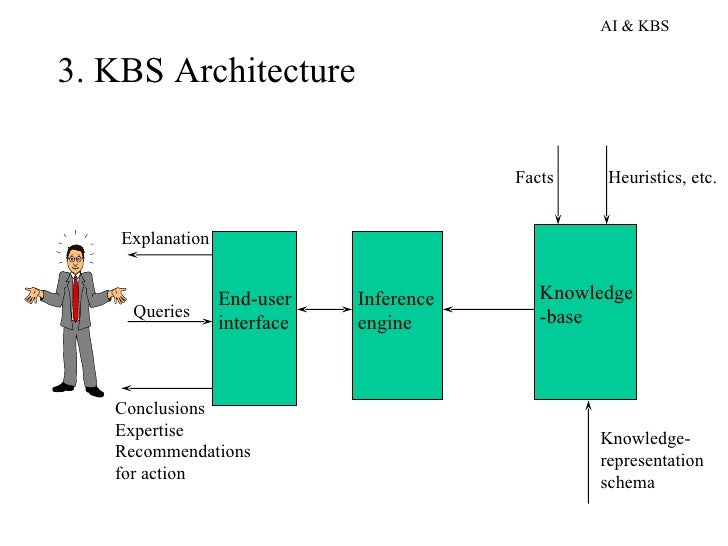
Knowledge-based Systems

Knowledge Based Systems -Artificial Intelligence by Priti Srinivas S ...

Types of Bots: An Overview

Learn more about all the different varieties of bots, and what they can do for you http://botnerds.com/types-of-bots/ In this articl...